- ● Live demo unavailable (Private)
- ● Screenshots Gallery
- ● Architecture details
Localization Content Generation Engine
A private AI-powered studio that translates peer-reviewed psychology content into Roman Urdu scripts and ebooks — built for a South Asian creator with a Gulf diaspora audience.
Problem
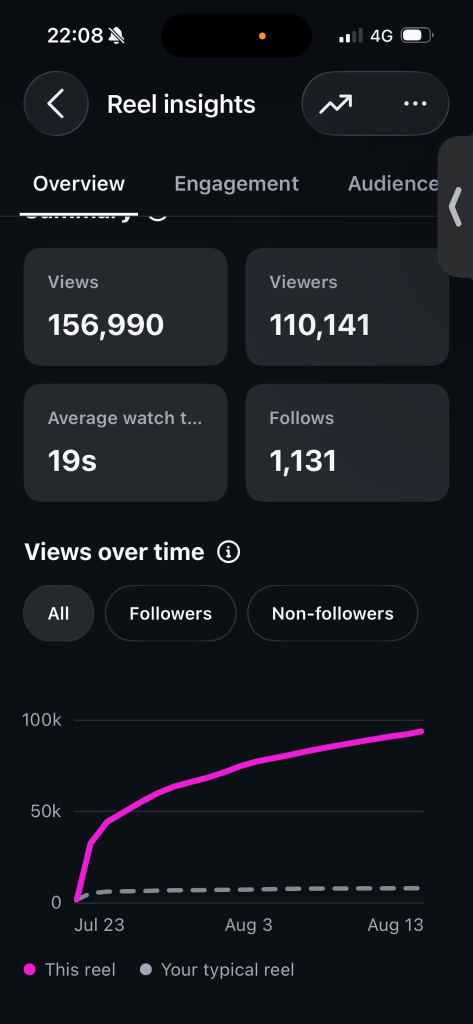
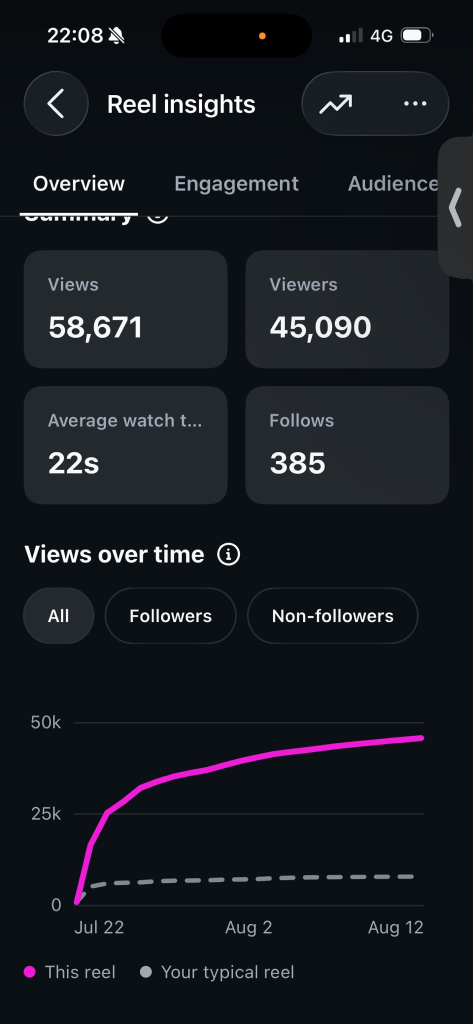
A psychology-focused social media creator had built a substantial video library and was expanding into evidence-based content — paraphrasing peer-reviewed journals and books for a lay audience. The challenge: his audience spoke Roman Urdu, a phonetic transliteration of Urdu using the Latin alphabet, not English or formal Urdu script. Academic concepts needed to be not just translated, but culturally localized — stripped of jargon, reframed in familiar South Asian idioms, and adapted to the emotional register of Gulf-based diaspora viewers. Doing this manually for each book section was a bottleneck that blocked both volume and quality.
Architecture & Solution
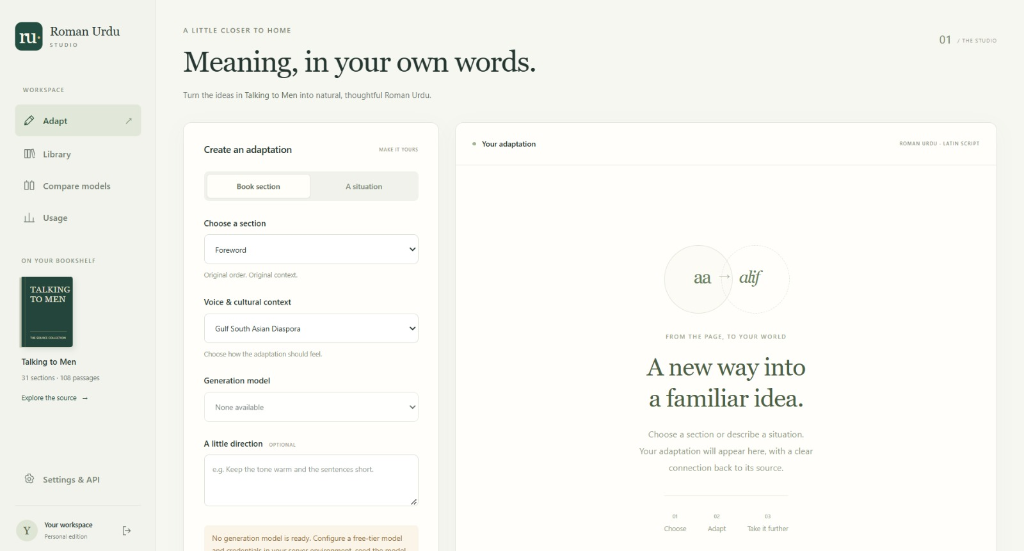
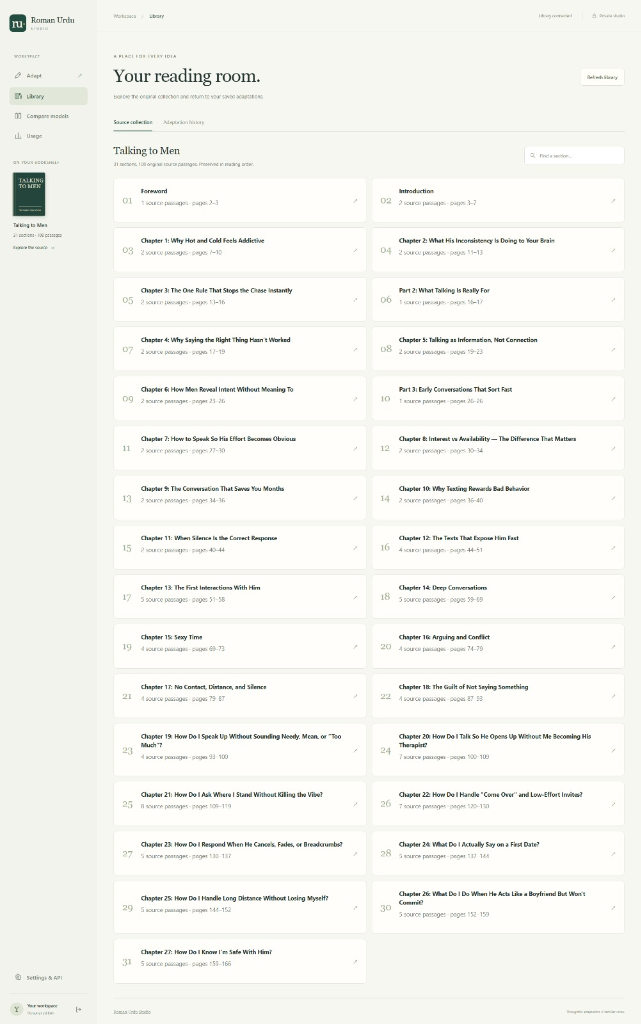
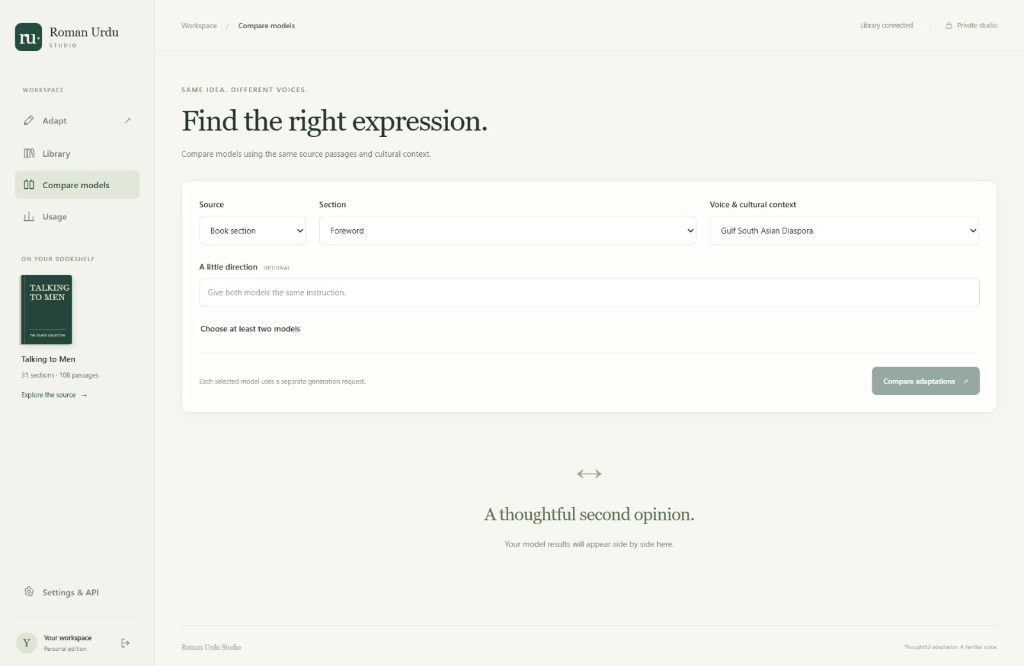
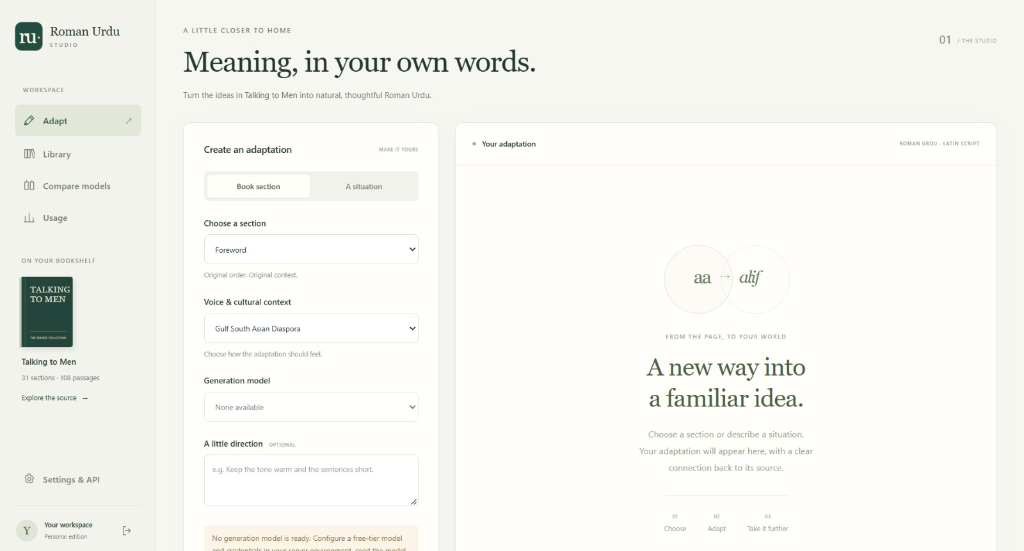
The engine is a private, password-protected workspace built around a source library and an AI adaptation layer. Books are ingested section-by-section, each passage stored with its original context. The Adapt module lets the creator choose a source section, select a voice and cultural context profile (e.g. Gulf South Asian Diaspora), pick a generation model, and optionally add directional notes. The system generates a Roman Urdu adaptation with an explicit connection back to the source passage — ensuring the output is traceable and citation-aware. A Compare Models view lets the creator run the same passage through multiple models side-by-side to pick the best expression. An API layer exports adaptations as JSON, Markdown, or plain text, feeding directly into publishing tools and ebook pipelines.
Implementation Decisions
- Voice & cultural context profiles — A configurable profile system (not just language — but cultural register, diaspora-specific idioms, and emotional tone) means the same source text can be adapted differently for Gulf readers vs. South Asian domestic audiences.
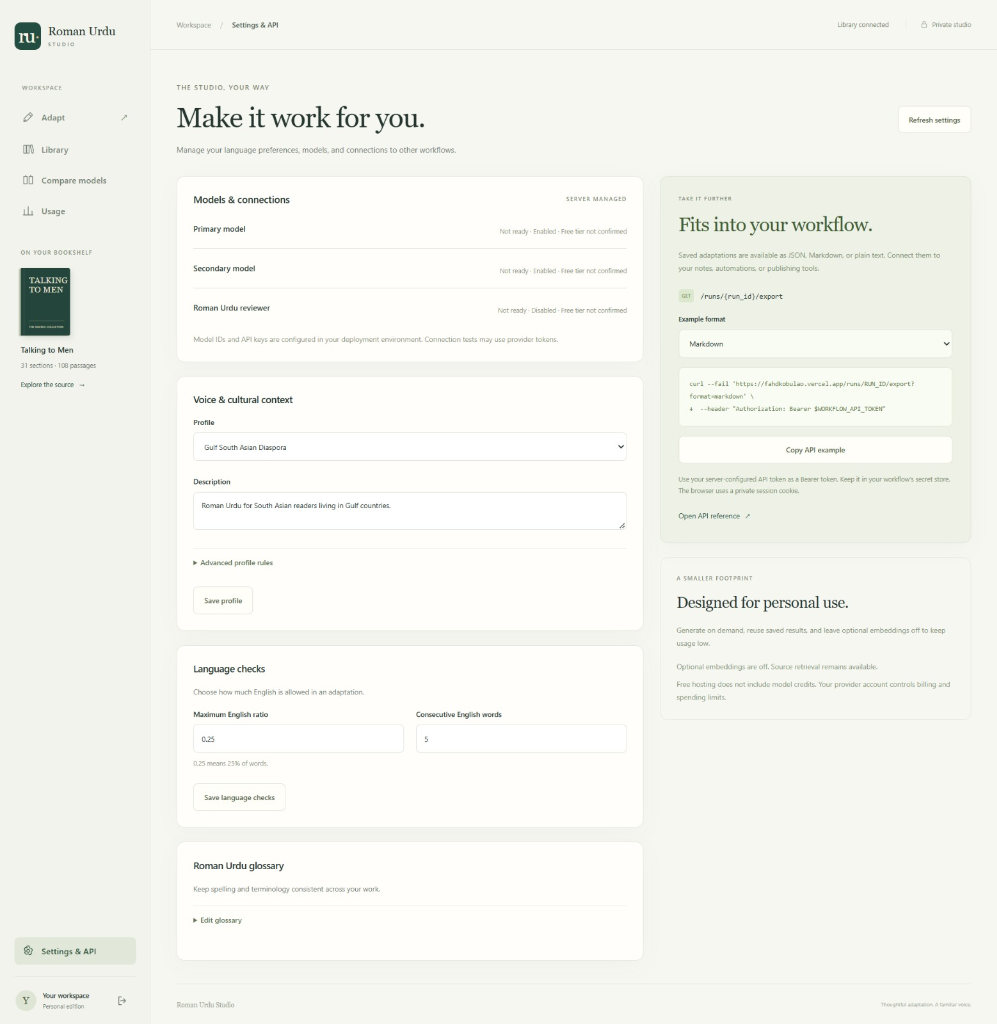
- Latin-script Roman Urdu enforcement — Language check settings enforce a maximum English ratio (25%) and cap consecutive English words (5), ensuring the output reads as Roman Urdu and not a mixed-language script.
- Source-linked adaptations — Every generated adaptation retains a pointer to its original passage and page range, making the content defensible, citation-ready, and reusable across products (scripts, ebooks, Instagram captions).
- Model comparison tooling — The creator can benchmark multiple LLMs on the same passage under identical cultural context — reducing the subjective judgment required to evaluate output quality.
- API-first export — Adaptations are available via a REST endpoint in Markdown, JSON, or plain text, enabling direct pipe into Notion, ebook generators, or scheduling tools without copy-paste friction.
- Private studio model — The entire workspace is password-protected, single-owner, and designed for personal use. No embeddings are stored unless requested, keeping usage lean and billing predictable.